
Start with the boring numbers
The defensible ROI model for document automation is not exciting, and that is the point. You start with volume (documents per month), minutes of manual handling per document, and a fully loaded labor rate. Multiply it out and you have a labor baseline.
For a workflow handling hundreds of invoices a month, where each can carry dozens or even hundreds of line items and each lookup takes a couple of minutes, that baseline gets large quickly.
Want to pressure-test this against your own process? A Process Assessment turns the idea into a mapped process, a baseline and a recommended first pilot.
Start with an assessmentThen add the costs your CFO already feels
Labor is the easy part. The bigger costs are the ones that do not show up on a timesheet: multi-day delays waiting on missing data, rework from overwritten records, duplicated effort, and revenue lost when the operation cannot execute on time.
In one engagement, missing product or compliance data routinely delayed shipments by 5–7 days. The labor to chase it was real, but the downstream cost — inventory used as samples, missed sales support — was larger and harder to see.
Model the range, not a single number
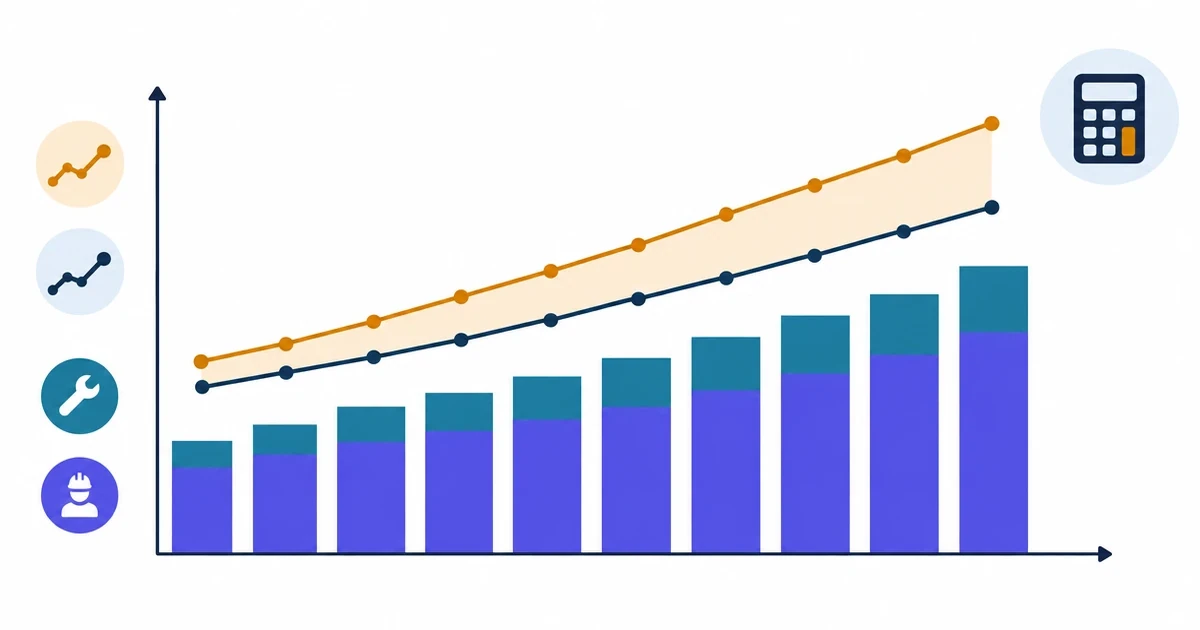
A credible model gives leadership a range tied to assumptions they can challenge, not a single hero number. Try our ROI calculator to sketch your own, then use an assessment to pressure-test it against your real workflow.