
Efficiency
- Staff hours spent managing shipments cut by about half, freeing that time for other work
- Clean shipment-invoice readiness cut from hours or days to about 20–30 minutes
A distribution operator running a high-volume, multi-country vendor and warehouse network replaced an uncontrolled process of emailed PDF invoices, shared spreadsheets, and manually typed labels with a single governed platform — AI-assisted invoice extraction, daily SAP and compliance validation, automated lot labels, enforced approvals, and end-to-end audit history.
Client identity withheld. Figures are drawn from the engagement and rounded to protect confidentiality.
Handling roughly 450+ vendor invoices and 100+ outbound shipments per month across a multi-country network.
The operator received vendor invoices as PDFs in a shared inbox, re-keyed them into shared spreadsheets that several people edited at once, and typed lot-number labels one at a time in a word processor. Staff manually looked up SAP product numbers and destination compliance codes across invoices carrying 50–80 line items — sometimes 200–300 — with no consolidated view of what was missing.
Missing SAP records or compliance codes commonly delayed shipments by 5–7 days, occasionally up to 10. There was no reliable audit trail, no formal approvals, and low trust in whether the spreadsheet data was even current. When sample and display products did not reach destinations on time, sellable inventory sometimes had to be used as samples — a direct revenue impact hidden inside what initially looked like an operations problem.
Following the Five Stars Method, we mapped how the process actually ran, prioritized the highest-friction steps, and built a controlled pilot that centralized the full shipment lifecycle: AI-assisted extraction with vendor-specific and default models, structured review with low-confidence flagging, automatic lot-number generation, daily SAP and compliance validation with consolidated exception reporting, enforced approvals, and a complete audit history.
Get to know our Five Stars Method →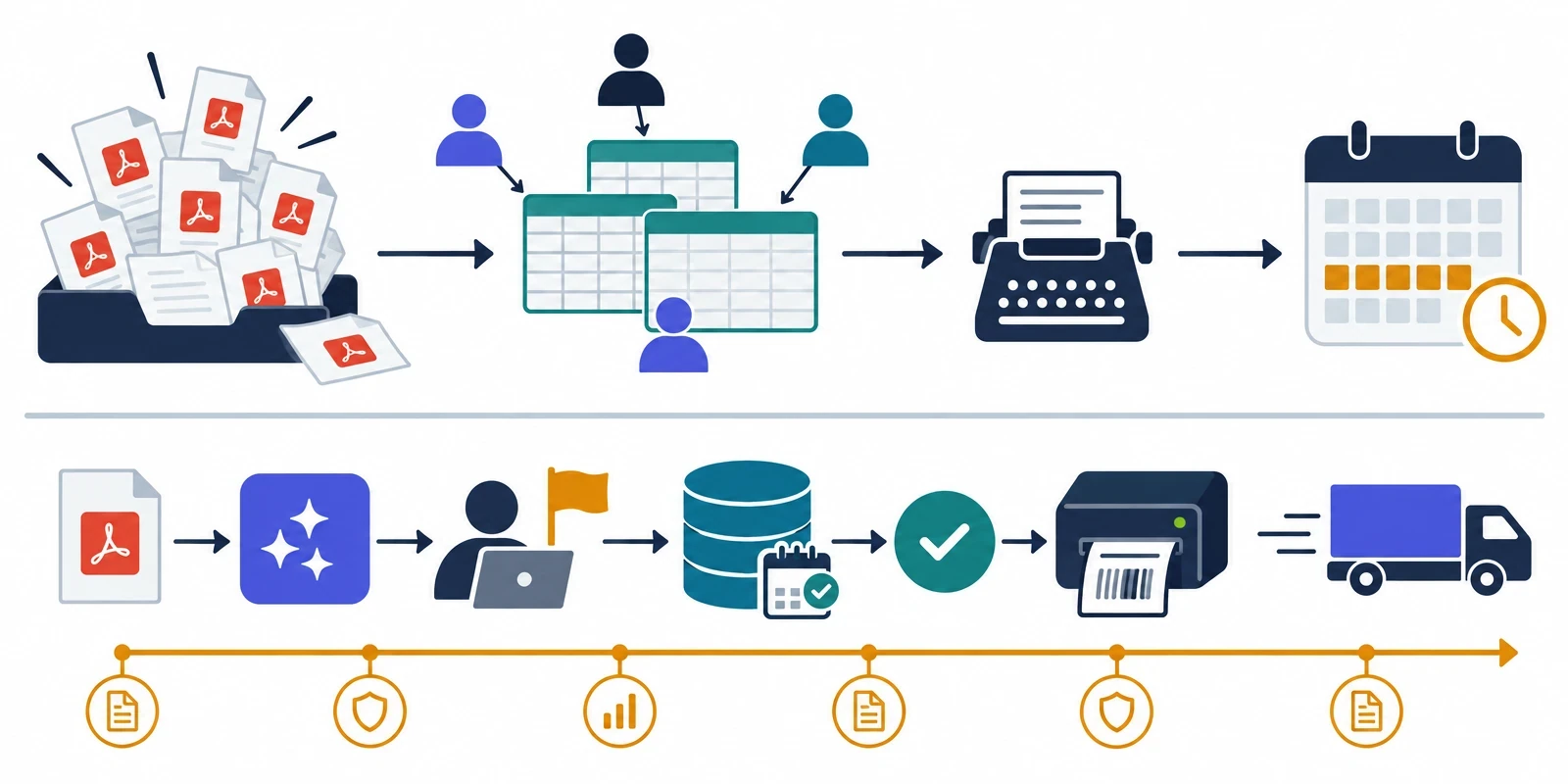
The solution was built as a cloud application using Azure Document Intelligence and custom AI extraction models — a vendor-specific model per major format plus a default model for new vendors — with original PDFs stored and linked to each record, role-based access, daily SAP data import, automated notifications, reporting dashboards, and user-level audit tracking.
The goal was never blind automation. Controls stayed inside the workflow so people remained accountable for business-critical decisions.
Managing shipments now takes about half the staff hours it used to and each one completes far faster, so the team can put that time into other parts of the operation.
Enforced approvals, audit history, and a single system of record replaced overwritten spreadsheets and untraceable email handoffs.
Daily validation flags missing product and compliance data early, instead of discovering blockers when it is time to ship.
Tell us about it in 30 minutes. You will leave with three places to look and an honest view of whether AI belongs there.